" /> Marine Corps News Room: July 2006 Archives

« June 2006 | Main | August 2006 »

July 30, 2006

Marines Prop Up Ailing Local Gov't in Iraq

RAMADI, Iraq -- Peering over piles of sandbags in this ravaged city, U.S. Marines sometimes see more gunmen on the streets than municipal employees going to work.

http://www.newsday.com/news/nationworld/world/wire/sns-ap-iraq-wild-west,0,6498926.story?coll=sns-ap-world-headlines


By ANTONIO CASTANEDA
Associated Press Writer
July 30, 2006, 3:42 PM EDT

The provincial governor regularly arrives at his office with armed guards in tow. Young Marines notice few others on his staff trail behind.

After three years of war in Ramadi, the U.S. military has yet to move from combat to stabilization operations in most of this Sunni Arab city of 400,000 people, the capital of Anbar province.

Here full-fledged combat still rages. Efforts to build a local government have faltered.

In just four months, one Marine has fired 27 rockets. Another estimates he's fired 5,000 rounds from a .50-caliber machine gun. One marksman has 20 confirmed kills. His superiors believe he's probably killed another 40 but they aren't sure.

The U.S. military said Sunday that four U.S. Marines assigned to the Regimental Combat Team 7 were killed in action in Anbar province, although it did not say where.

Residents of Ramadi are afraid of even walking near the offices of the Anbar provincial government, which is supposed to administer an area the size of North Carolina, and with about one million inhabitants.

"There's been a concerted campaign against government officials that's had some great success ... the government center is nearly devoid of governance," said the top Marine intelligence officer for the 3rd Battalion, 8th Regiment, who asked not to be identified because of security policies for intelligence officers.

Earlier this year, policemen were stationed in a rebuilt station within the compound -- but daily attacks scared them away. Now the freshly painted police station is empty, surrounded by police cars with tires flattened by mortar shrapnel. Iraqi soldiers were also relocated to safer parts of the city, leaving the government's defense again in the hands of Marines.

"The only way this thing is going to get normal is if Iraqis stand up for themselves," said Sgt. John Strobridge, 21, of Orlando, Fla., as he walked through the empty police station. Pointing to the damaged police vehicles, he observed, "As you can see, they didn't last long."

In recent weeks the U.S. military has tried to remove neighborhoods from insurgent control, building new outposts deeper into the city to extend the reach of its patrols. Marines are also trying to expand the so-called "Green Zone" of the city, a calmer western neighborhood of about 25,000 people near a cluster of U.S. bases.

But in the heart of the city, the war is unabated.

"The number one thing I'm looking to do is kill the enemy," said Capt. Andrew Del Gaudio, 30, of New York, commander of Company K, 3rd Battalion, 8th Regiment. "I do that knowing that when I do that I allow the Iraqi government to function."

The Marines defend a U.S.-appointed government that's struggled to build its credibility in this mostly Sunni Arab city. Since the toppling of their longtime patron Saddam Hussein, Sunnis have fallen out of power and the once-repressed Shiites have ascended.

U.S. officials hope the national unity government that took office this spring with greater Sunni Arab representation will persuade some insurgents to lay down their arms. But the provincial government here -- comparable to state governments in the United States -- is still run by officials handpicked by Americans or U.S.-chosen councils.

That raises questions about their legitimacy among Sunni Arabs, the most disaffected group in Iraq and the bedrock of the insurgency.

So far the insurgency has shown few signs of backing off its mission of destroying anything that cooperates with the U.S. military. The provincial governor says he's survived nearly 30 assassination attempts. Two of his predecessors resigned under threat and another was kidnapped and killed.

The vast majority of insurgents in Ramadi -- at least 90 percent, by U.S. military estimates -- are locals. Most of the Al-Qaida members who make up about a quarter of all insurgents are Iraqi, U.S. officials say. Just 5 percent to 10 percent of all insurgents are foreigners, the military estimates.

Foreign fighters "are a very small percentage, and you see that reflected everywhere. We don't capture or detain an awful lot of these guys," said Col. Sean MacFarland, commander of the Army's 1st Brigade Combat Team, 1st Armored Division, which oversees the city.

While still operating in wide areas of the city, some Marines say they're content to battle away and trim the insurgency's ranks.

"We're in a very aggressive neighborhood. We need to take out as many of them as possible at a time, and throw in some intimidation there too," said Lance Cpl. Richard Mason, 21, of Medina, Ohio, who has fired 27 rockets on gangs of insurgents in the area.

Some Marines, many on their second tour in Iraq in as many years, expressed impatience with the government's efforts to build a military and assert control of its streets. But others said they were willing to keep fighting while Iraqi officials struggle to build a foundation of government here.

"Yeah, I'd like Iraqis to step up to the plate. But that's why we're here. We're here to teach them to be self-sufficient and train their army," said Lance Cpl. Galen Wilson, 21, of Fort Lauderdale, Fla.

Marine photographer says Kevlar helmet saved him from enemy bullet in Iraq

Cpl. Brian M. Henner, a 22-year-old Marine from Rochester, N.Y., displays the Kevlar helmet he wore July 23, 2006, when he was shot in the head by an insurgent. Henner, a combat photographer with Regimental Combat Team 7, was shot in the helmet when insurgents, hidden in a near-by tree-line, fired upon Marines manning a vehicle inspection checkpoint. The incident took place in Haqlaniyah – one of three Euphrates River valley cities in the western portion of Al Anbar Province which make up the Haditha Triad region. “If I didn’t have it on, it probably would have went into the top of my head,” said Henner, a two-time veteran of Operation Iraqi Freedom. “It didn’t just graze, it dug in to the helmet, but that’s why we wear them, though.” Henner was photographing the Marines’ activities when the gun fight began, and was caught in the middle. After firing several rounds at the insurgents, he began crawling along the median away from the insurgents’ fire – that’s when he was shot in the head, he said.

http://www.usmc.mil/marinelink/mcn2000.nsf/main5/1B4F4B358215EC0D852571BB00489710?opendocument


July 30, 2006; Submitted on: 07/30/2006 09:12:52 AM ; Story ID#: 200673091252

By Staff Sgt. Jim Goodwin, 1st Marine Division


CAMP AL ASAD, Iraq (July 30, 2006) -- Though a religious man, Cpl. Brian M. Henner doesn’t attribute Divine Intervention, luck, fate or destiny to the fact that he’s still alive after taking an enemy bullet to the head.

Instead, the 22-year-old U.S. Marine says it was his Kevlar helmet that saved his life in the middle of a gunfight between Marines and insurgents in Iraq’s Al Anbar province last week.

“If I didn’t have it on, it probably would have went into the top of my head,” said Henner, a native of Rochester, N.Y. “It didn’t just graze, it dug in to the helmet, but that’s why we wear them, though.”

Henner, a Marine combat photographer with Regimental Combat Team 7, was shot in the helmet when insurgents, hidden in a near-by tree-line, fired upon Marines manning a vehicle inspection checkpoint July 23.

The incident took place in Haqlaniyah – one of three Euphrates River valley cities in the western portion of Al Anbar province which make up the Haditha Triad region.

While snapping photographs of Marines searching locals’ vehicles, Henner says the Marines began receiving gunfire from a tree-line across the street. The Marines immediately took cover behind a car, but Henner was stuck in the road, where he was photographing from when the fire started, with just a small median to provide protection and concealment.

As the insurgents continued to fire against the Marines, Henner laid on his belly behind the road’s median – the only protection he and another Marine in the street had – and returned fire with his rifle before crawling along the median and away from the firing.

He says he was shot when he was crawling away from the firing. The impact of the bullet took a chunk out of the top of his helmet.

“I saw a flash and then, ‘Wham!’ something hit me in the head real hard,” said Henner, a 2002 graduate of Brookport High School in Rochester. “I knew it wasn’t a rock, and I thought, ‘Damn, I think I just got shot in the head.’”

With other Marines yelling at him to “Move!” – Henner sprang to his feet, ran for the car, and slid across its hood – breaking his camera lens in the process.

He then used his personal camera to record short video clips of the ensuing gun battle, which lasted less than 30 minutes altogether, he said.

“It wasn’t just another patrol to hand out candy,” he said. “I remember that whole 25 minutes pretty well.”

His parents were “surprisingly calm” about the incident after Henner told them on the phone what had happened, he said.

“She’s (mom) taken credit for this with all the prayers she says,” said Henner, who joined the Marines shortly after the terrorist attacks on the World Trade Center in 2001.

“It makes me mad that people don’t remember that anymore,” he said. “That was a big recruiting drive for the U.S. military.”

As a combat photographer and two-time Operation Iraqi Freedom veteran, Henner has snapped thousands of photos of Marines, U.S. soldiers and Iraqi security forces conducting security operations in Al Anbar province. He’s spent countless hours “outside the wire” with U.S. and Iraqi military forces, documenting the war through photos.

Still, this was the first “bonafide firefight” he’s been in, he said, although he “just lets it all roll off” his shoulders, the incident has made him a bit more “aware” to his surroundings.

“I carry a lot more (rifle) magazines now,” he said.

With less than six months left in the Marine Corps, Henner plans on leaving the military to pursue college, he said.

To view Henner’s photos, as well as the photos of U.S. Marine combat photographers throughout the world, go to the Defense Visual Information Center at http://www.dodmedia.osd.mil/.

Email Staff Sgt. Goodwin at: goodwinjm@gcemnf-wiraq.usmc.mil.

Please click on pictures for full descriptions and credits.

McCain's youngest son joins Marines

PHOENIX, ARIZONA -- The youngest son of Sen. John McCain (R-Ariz.) has joined the Marine Corps and could be deployed to a war zone in a matter of months, according to a magazine report. Jimmy McCain, 18, will begin basic training in September. He'll spend three months in boot camp and undergo a month of specialized training before being assigned to a unit.

http://www.chicagotribune.com/news/nationworld/chi-0607300166jul30,1,1392308.story?ctrack=1&cset=true

Items compiled from Tribune news services
Published July 30, 2006

"I'm obviously very proud of my son," the elder McCain told Time, "but also understandably a little nervous." McCain's communications director, Eileen McMenamin, confirmed the Time story but said the senator would not comment further Saturday. McCain has been an outspoken supporter of the war in Iraq and said last month during a Senate debate that withdrawing troops would "risk disaster." Another of the senator's seven children, Jack, 20, attends the U.S. Naval Academy.

July 29, 2006

Combat engineers: Valuable asset to U.S., Iraqi security operations in western Iraq

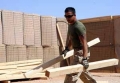
Cpl. Bryan D. Escobedo, a U.S. Marine and combat engineer attached to the Twenty-nine Palms, Calif.-based 3rd Light Armored Reconnaissance Battalion, carries lumber for use in the construction of bunkers July 27, 2006, at Camp Korean Village, Iraq. Bunkers are just one example of the various construction projects combat engineers frequently build to help protect Marines and Iraqi soldiers throughout the country’s Al Anbar Province. The engineers, trained in demolition, mine detection, and construction, operate in this vast desert stretching from the Jordanian border about 120 miles east towards the Euphrates River. Most of the engineers’ time is focused on beefing up security measures at the various U.S. military bases throughout Anbar’s western desert region. “We’re jacks of all trades,” said Cpl. Joshua T. Raney, a 21-year-old combat engineer attached to the battalion’s engineer detachment. “Without us, a lot of weapons caches, and IEDs would not have been found, and a lot of stuff wouldn’t have been built- we just make things a little easier for everyone.” In addition to the fortifications, combat engineers are keeping Coalition Forces safer by disposing of unexploded ordnance. Since their arrival in March, the engineers disposed of more than 500 pounds of ordnance – mortars, rockets, bombs, and other munitions. “We’re cutting down on the insurgents’ munitions,” said Raney. “For every piece we blow up, that is one less IED.” Escobedo is a 21-year-old from Houston, Texas.

http://192.156.19.109/marinelink/mcn2000.nsf/main5/5359D7A89BEF554D852571B9005C6ED0?opendocument


July 28, 2006; Submitted on: 07/28/2006 12:49:36 PM ; Story ID#: 2006728124936

By Cpl. Graham A. Paulsgrove, Regimental Combat Team7


CAMP KOREAN VILLAGE, Iraq (July 28, 2006) -- While sectarian violence appears to be on the rise in other areas of Iraq, U.S. Marines in western Al Anbar province are beefing up security at U.S. military camps here, which will eventually be turned over to Iraqi Forces.

A team of Marine combat engineers attached to the Twenty-nine Palms, Calif.-based 3rd Light Armored Reconnaissance Battalion spent the past several months keeping roads free of improvised explosive devices and strengthening buildings and forward operating bases to keep U.S. and Iraqi military forces secure in this region.

“We’re jacks of all trades,” said Cpl. Joshua T. Raney, a 21-year-old combat engineer attached to the battalion’s engineer detachment. “Without us, a lot of weapons caches, and IEDs would not have been found, and a lot of stuff wouldn’t have been built- we just make things a little easier for everyone.”

The engineers, trained in demolition, mine detection, and construction, operate in this vast desert stretching from the Jordanian border about 120 miles east towards the Euphrates River.

Most of the engineers’ time is focused on beefing up security measures at the various U.S. military bases throughout Anbar’s western desert region. In January, engineers built an eight-foot high dirt berm around Rutbah to curb smuggling and insurgent activity.

To gain access to or leave this city of 25,000, vehicles must pass through one of three traffic control points, which are manned by Iraqi soldiers, ensuring everything that goes in and comes out is screened- limiting insurgent activity.

Rutbah is considered by U.S. military officials in Iraq as a strategic location for insurgents and smugglers, since it is located astride two main supply routes – one from Jordan, and one from Syria. Traveling east from the Syrian or Jordanian border, the supply routes lead through Rutbah and continue on to the heart of the Sunni Triangle – Ar Ramadi, Al Fallujah, and Baghdad.

Furthermore, with the gradual turnover of areas of responsibility to Iraqi forces, the engineers have focused some of their efforts on fortifying Iraqi border forts and fighting positions throughout western Al Anbar Province. In Akashat, a small town near the Iraqi-Syrian border, the engineers built several bunkers so Iraqi soldiers could monitor the town’s traffic.

“Our job is to make sure the guys standing post have a strong and safe position- they depend on us for it,” said Raney, who is on his second deployment to Iraq. “While this is a relatively quiet [area], you never know when something bad might happen.”

Rutbah’s three entrances and exits are controlled by Iraqi Soldiers, supervised by Marines from the battalion- since its construction; it has received a few improvements by the current crop of engineers.

“We added a lane for water trucks at [the most heavily trafficked entrance] and took four days to reinforce a few gaps in the berm,” said Cpl. Shane R. McConnell, 23, from Rosebush, Mich. “The good people in Rutbah have no problems with going through the checkpoints to get in and out of town, but the ones up to no good, they are looking for the spots in the berm to try and get out undetected.”

But McConnell says his and the rest of the detachment’s actions are making sneaking in and out of the city more difficult, “by adding a few barriers and a lot of dirt.”

In addition to the fortifications, combat engineers are keeping Coalition Forces safer by disposing of unexploded ordnance. Since their arrival in March, the engineers disposed of more than 500 pounds of ordnance – mortars, rockets, bombs, and other munitions.

“We’re cutting down on the insurgents’ munitions,” said Raney. “For every piece we blow up, that is one less IED.”

McConnell, the detachment’s sole heavy equipment operator, says his job is crucial in to the battalion’s various construction and fortification projects.

“Without me, 3rd LAR would have a lot of shoveling to do,” said McConnell with a grin.

The combat engineer detachment, completing tasks usually performed by a 30-man engineer platoon, makes up in experience what it lacks in sheer numbers.

“[The battalion] was lucky to get such an experienced and well-trained group of Marines,” said Capt. John C. Morgan, 27, the battalion’s engineer officer. “Not only do they bring their engineer set of skills to the table, but are also able to assimilate with [the infantrymen] and serve as provisional riflemen at the same time.”

Playing the role of the infantryman is crucial to the mission of the engineer, and those skills have come into play for a few of the detachment’s members, said Morgan.

“When we were in Habbiniyah, there was a high level of contact, every day something would happen,” said Cpl. Paul Kozlowski, from Bowie, Md., a combat engineer. “[Engineers] attached to grunt units are generally at the tip of the spear. We make sure people can get where they need to go, be it inside a house or over a bridge, we can’t do our job sitting on base- we have to be proficient as infantrymen to do our job.”

Sometimes, their job requires them to bring the muscle to breach doors and allow Coalition and Iraqi Forces to enter buildings by force to search for insurgents, but most operations don’t require such force.

“We have found that the doors are usually unlocked,” said Morgan. “We try to minimize collateral damage as much as possible.”

With their deployment coming to an end, the detachment will head back to their home station in Camp Lejeune, N.C., knowing they helped support both U.S. and Iraqi military forces.

“I know my work and the work of [the engineers] has had an effect on the future of Iraq,” said McConnell. “We are keeping Marines safe, Iraqis safe, Iraqi soldiers safe and the town of Rutbah stays quiet because insurgents know they can’t get their stuff in or out.”

Email Cpl. Paulsgrove at: paulsgrovega@gcemnf-wiraq.usmc.mil.

Photos By: Cpl. Graham A. Paulsgrove

For MORE photos, and photo descriptions and credits please click on ANY picture

Leathernecks secure embassy, help civilians escape conflict

BEIRUT, Lebanon — It might be an embassy diplomats and military commanders insist is still open for business, but with all the Marines and security teams buttressing the hilltop compound, it sure didn’t look that way.

http://www.marinecorpstimes.com/story.php?f=0-MARINEPAPER-1970252.php

By Christian Lowe
Staff writer


Snipers peered through their scopes from a half-constructed building flanking the U.S. Embassy’s front gate, looking for any terrorist assault that might come from the narrow streets of this Mediterranean city thrown once more into conflict.

The gunners manning .50-caliber machine guns and the stern-looking guards at the gate might be on edge, but the Marines here seemed to take it all in stride.

“This isn’t what we expected to do when we deployed, but nobody’s complaining,” said 2nd Lt. Matthew Johnson, commander of 2nd Platoon, Charlie Company, 1st Battalion, 8th Marines — the 24th Marine Expeditionary Unit’s battalion landing team.


“It’s pretty easy to see here what needs to get done.”

On July 15, Johnson — a native of Pottstown, Pa. — and his platoon flew hundreds of miles from a remote desert base in Jordan to the island of Cyprus, deploying to Lebanon the next day to help bolster security at the U.S. Embassy and assist in the evacuation of U.S. citizens fleeing the escalating conflict.

Since then, Marines have been living among the manicured lawns and sloping hills overlooking the azure waters of the Mediterranean Sea, busying themselves with the massive air and sea lift that had pulled nearly 7,000 Americans out of Lebanon less than a week after the Marines arrived.

As about 25 Americans prepared to load into one of the MEU’s CH-53E Super Stallion helicopters July 21, Johnson and his men strapped helmets on the mostly women and children who waited in a line as the helo’s engines roared above the compound’s landing pad.

With a deafening rush and a hail of dirt and debris, the Super Stallion lifted off, carrying its cargo to the safety of Cyprus, 120 miles away.

Meanwhile, on a small beach at the base of the hills sloping seaward from the embassy’s grounds, Marines with MEU Service Support Group 24 processed hundreds of fleeing Americans as they filed by to board Navy amphibious ships loitering just offshore.

As Sgt. Peter VanCleave, 24, of Marietta, Ga., typed the names of waiting passengers into a computer, children and their parents huddled in groups, waiting for Navy personnel to lead them the last 100 yards to the beach.

“Go figure, Marines are helping people instead of doing what we normally do these days,” said the logistics Marine, who was also involved in the MEU’s relief operation during Hurricane Katrina last year.

“Everyone’s been pretty calm,” he said, a pile of blue passports emblazoned with the gold seal of the U.S. sitting next to his worn keyboard. “They all seem to be [seasoned] international travelers.”

As the Americans continued to queue up, Staff Sgt. Charles Addison, from Winnsboro, La., walked up and down the line, making sure his Marines were doing their job and keeping the flow of evacuees going through.

“We practiced this before we deployed,” Addison, another Katrina relief veteran, said. “So it hasn’t been that much of a stretch.”

Walking unsteadily down the rocky slope to the yellow-sand beach, the troops helped the last of the evacuees onto the landing craft bound for the amphibious transport dock Trenton — a load of about 300 civilians toting suitcases, strollers and backpacks.

Huddled against the landing craft’s starboard bulkhead, Rima Chacar of Coral Gables, Fla., lamented her vacation cut violently short.

“Everyone was saying it would be tough to leave if we waited any longer,” Chacar said, her son Hani and daughter Aya close by her side. “It’s just the uncertainty that prompted us to leave.”

The boat rocked side to side as the ocean waters surged ashore, its load of evacuees weighing the craft down so much that a Seabee-driven bulldozer was called in to give the craft a push.

Just a short drive later — and with a final “clang” against the Trenton’s cavernous well-deck door — the ordeal of Chacar and her fellow travelers was nearly over. Just a six-hour cruise courtesy of the U.S. Navy and a seat on an embassy-chartered plane out of Cyprus and she’d be safely back home.

But as the lines swelled throughout the day, it was clear to the Marines and sailors helping get their fellow citizens out of Lebanon that the job was far from over.

“I’ll tell you exactly how long it’s going to take for us to get this done,” said Brig. Gen. Carl Jensen, Task Force 59 commander, as he watched the evacuees walk across the beach and onto the landing craft’s slippery deck.

“It will take as long as there are Americans here who still want to leave.”

Two decades after barracks bombing, 1/8 Marines help civilians flee Lebanon

Two decades after barracks bombing, 1/8 Marines help civilians flee Lebanon

(Courtesy of the Marine Corps Times)
http://www.marinecorpstimes.com/story.php?f=0-MARINEPAPER-1966752.php

By Christian Lowe and William H. McMichael
Staff writers


The sectarian conflict in Iraq was raging, and there was talk of a temporary troop increase to tamp down the violence. Would the MEU be called back to Iraq, many wondered?

Then the Middle East tinderbox burst into white-hot flame once again.


What followed the initial July 13 warning was a hasty and deliberate operation pulled together in a matter of hours that drew on embassy evacuation skills the Corps has honed for decades and took advantage of the rapid contingency planning that has made MEUs legendary.

“The Joint Chiefs of Staff looked at who was in the region, and it turned out we were the force of choice,” said Col. Ron Johnson, 24th MEU commander, in a July 20 interview.

It was a remarkable coincidence. The MEU’s battalion landing team — 1st Battalion, 8th Marines — was the very same battalion that was attacked in 1983 when terrorists bombed the Marine barracks in Beirut. In fact, 1/8 is nicknamed “The Beirut Battalion.”

This new operation would lead to Marines landing upon shores they’d abandoned nearly 23 years earlier, battered and bruised by the very terrorist organization that had started this most recent flare-up, and it would put the Corps near the controversy over whether the U.S. moved quickly enough to protect its citizens in a war-torn land.

Commanders and U.S. envoys here claim the movement of thousands of civilians fleeing a war zone like Lebanon is never easy, and dealing with the complex diplomatic issues that weave throughout any potential operation in this region would bog down any military planning.

With their command in place, however, hundreds of Marines and sailors and small contingents of soldiers and airmen — along with the State Department — have worked day and night to pull out any Americans who want to leave war-ravaged Lebanon. And as of July 21, the U.S. force was continuing to grow.

From the desert to the sea

On July 13, one day after radical Shiite Hezbollah guerrillas crossed Lebanon’s southern border into Israel, killing three Israeli soldiers and capturing two, a “crisis action team” with the Camp Lejeune, N.C.-based 24th MEU began considering options for a potential evacuation of the U.S. Embassy in Beirut should the order come, Marine officials confirmed.

While the Israeli military responded to the Hezbollah raid with a wide-ranging bombing campaign by sea and air — striking roads, infrastructure and the country’s airport in an effort to cut off potential kidnapper escape routes and force Hezbollah to disarm — military and diplomatic officials worked on the U.S. response.

“From an information perspective, these are warnings you always look at,” Johnson said.

By July 14, commanders within the MEU had at least one tentative plan of action, calling for a risky, long-range helicopter extraction of civilians using the MEU’s three CH-53 Super Stallion helicopters flying over land, Corps officials said.

As the day progressed, MEU Marines began to wrap up their exercise with the Jordanian military, dubbed Infinite Moonlight 2006, a week ahead of schedule and 200 miles away from their ships in the Jordanian port of Aqaba.

As a precaution, Johnson ordered the immediate loading of the amphibious transport dock Nashville in case it was needed for support.

The next day, State Department officials formally asked the Pentagon for help pulling U.S. citizens out of the increasingly violent conflict, prompting MEU commanders to enact their finalized helo-extract plan.

On July 15, three Super Stallions and a force of about 100 Marines, including a security platoon from 1/8, flew from Jordan through Egypt and onto the Mediterranean island of Cyprus — which lies roughly 120 miles northwest of Beirut on the central Lebanese coast — to prep for the operation.

Johnson had planned on an aerial refueling of the CH-53Es, but said it turned out the helos had long enough “legs” to make do without it.

After spending the night in Cyprus, the security platoon boarded the heavy-lift transport helos around 2 p.m. local time and flew for about an hour to the U.S. Embassy’s grounds in Beirut to pick up the first group of civilians.

An 80-man security platoon remained at the embassy while the Super Stallions flew back to Cyprus with 25 evacuees aboard, landing at the closed British military base of Akrotiri.

With that initial flight complete, and the situation in Lebanon “continuing to deteriorate,” the MEU was ordered July 17 to load the rest of its troops and gear back aboard its amphibious ships and head full steam for the eastern Mediterranean Sea to join the growing air and sea rescue, Johnson said.

Dangerous territory

Despite the benign nature of the U.S. mission, military and diplomatic officials are aware that their forces could become targets, as Marines were in the 1983 Hezbollah bombing.

A July 14 Hezbollah cruise missile attack on an Israeli military ship underlined the risk to U.S. warships and commercial vessels off Lebanon’s coast. The Israeli ship caught fire, was severely damaged and had to be towed back to port. Four sailors were lost at sea. A simultaneous barrage missed a second warship but struck a civilian merchant vessel.

Top military officials said U.S. forces are in close coordination with the Israeli military, which has blockaded the Lebanese coast save for the rescue ships, and with Lebanon’s government to keep the exodus from coming under fire.

“I cannot express enough gratitude to the government of Lebanon for the security they have provided and the assistance that they have provided in that endeavor,” said Brig. Gen. Carl Jensen, Task Force 59 chief and overall commander of the U.S. military’s assistance effort here.

Navy ships are providing security for civilian transports chartered to help move the thousands of Americans expected to leave Lebanon. The Navy ships are “prepared to defend themselves,” should they come under attack as the Israeli vessel did, said Lt. Cmdr. Charles Brown, a 5th Fleet spokesman.

The Norfolk-based destroyers Gonzalez and Barry were called in to provide security, Navy officials said.

Jensen said the amphibious assault ship Iwo Jima, the dock landing ship Whidbey Island and the amphibious transport dock Trenton would be close enough to Beirut by July 21 to lend support with additional helicopters and landing craft. The Nashville arrived earlier to load Americans onto landing craft.

“It’s absolutely a team effort,” Jensen added.

Johnson plans to employ the larger Iwo Jima as a “lily pad,” a place the smaller amphibious ships could bring evacuees. That would shorten the rescue efforts, since the smaller ships could return to shore faster while the evacuees were transferred by ship or helicopter to Cyprus.

“When you’re doing such a large-scale movement, you have to be as efficient as possible,” Johnson added.

The Iwo Jima Expeditionary Strike Group and the MEU have 24 helicopters at their disposal. In addition, the amphibs carry landing craft that went ashore to help with the evacuation.

Should the need arise, the Iwo Jima is equipped with a 600-bed hospital that contains six operating rooms.

Coming ashore

On July 20, the first U.S. military vessel to come ashore in Lebanon for the rescue operation landed on a beach in Beirut to load hundreds of fleeing U.S. citizens. A landing craft from the Nashville was used to transport the Americans back to the ship, which headed for Cyprus that evening.

The Nashville joined the civilian cruise ship Orient Queen and the ferry boat Ramah — which have been chartered by the Pentagon to help with the operation — in moving what military officials hope will be at least 7,000 Americans out of Lebanon by July 21.

And as more transports are added each day, the departure of civilians mounts.

“We just started this in earnest a few days ago — starting in the tens and hundreds,” Jensen said July 20. “We hope by the end of today we will have moved in excess of 1,100 American citizens from Lebanon.”

Jensen rebuffed criticism of the timing of the military’s efforts to assist the American exit, saying he’s as impatient as anyone to assist all who want to leave.

“It can never go fast enough until the job is absolutely complete,” Jensen said.

And U.S. officials also stated firmly that America was not “evacuating” Lebanon and the U.S. remained committed to keeping its embassy open.

“They are not abandoning their post,” Jensen said of the embassy staff in Beirut. “This is not in any way, shape, manner or form an evacuation of Lebanon. It’s just an assisted departure.”

Helping the transition

The embassy in Cyprus is arranging charter flights back to the U.S. so the Americans who’ve left Beirut can fly home as soon as they offload from ships and helicopters, deputy chief of mission Jane Zimmerman said.

Contingency plans are in the works to temporarily house U.S. citizens if no flights are available in time, but Zimmerman said she worried a massive influx might put “too much of strain on this small but lovely island.”

“It is a big logistical challenge, everyone is dedicated to making it a success,” Zimmerman said. “We want to keep people on the ground as short a time as possible. Cyprus is a lovely place, but they’re not coming here for a vacation in Cyprus, they want to go home.”

A small contingent of Marines from MEU Service Support Group 24 is assisting with medical screening, entry control and security as the Americans arrive, Marine officials said. Navy and Air Force doctors and medical first responders have been dispatched here from Ramstein Air Force Base, Germany, and Kuwait to assist passengers with any medical problems, said Brown, the 5th Fleet spokesman.

Both Zimmerman and Jensen were unable to say how many Americans have registered at the embassy in Beirut to leave, admitting many are reluctant to depart and some changed their minds at the last minute.

For anyone considering leaving Lebanon, “it’s a deeply personal decision,” Zimmerman said.

But as the fighting continued to rage in southern Lebanon between Israeli forces and Hezbollah militia, and the bombs fell from Israeli warplanes throughout the country, it seems the military’s assistance to Americans wishing to leave will continue.

“We told the crews … that our mission is going to be to help Americans get to safety,” said Capt. Sinclair Harris, commodore of the Iwo Jima ESG. “And like what happened with us in [Hurricane] Katrina, I know that the sailors are looking forward to doing anything they can to help Americans get to safety.”

William H. McMichael reported from Hampton Roads, Va.

HEAT readies Marines for rollovers

Across the horizon, a humvee makes its way along a ridgeline when suddenly the ground under it begins to give way. The vehicle immediately tips down, crashes into the dirt and begins rolling into a ravine. No one inside sees daylight because of the dust and debris that seems to come from everywhere.

http://www.op29online.com/articles/2006/07/28/news/news01.txt

Sgt. Robert L. Fisher III
Combat Correspondent

But the Marines inside are prepared to handle exactly this kind of scenario. They brace themselves when they feel the humvee start to roll over and do their best to keep from being injured on the way to wherever gravity is taking them. When the vehicle finally comes to a stop, each Marine checks themselves, their buddies and their door. Fortunately, everyone is able to escape without delay and there are no injuries.

In contrast to this scenario where everyone escaped without injury, more than 70 percent of service member deaths in Iraq are due to vehicle rollovers, according to the U.S. Army's Ground Accident database. Now, however, there is a new way to reduce potential injuries by familiarizing Marines and sailors with what to expect during a vehicle rollover.

The prototype Humvee Egress Assistance Trainer was brought to the Combat Center by a project team from the Marine Corps Systems Command and tested here at 3rd Battalion, 11th Marine Regiment's motor pool July 20.

The HEAT enables service members to experience a controlled vehicle rollover, enabling them to make potentially life-saving decisions based on real experience.

“It's basically the cab of a humvee - the front and back passenger sections - and they've stuck it on a rotisserie like a chicken,” said SSgt. Hector Viramontes, Combat Center HEAT and Virtual Convoy Combat Instructor. “All that is attached to a hydraulic motor that spins it around.”

The cab is slowly pitched beyond 360 degrees, stopped either on its side or upside down, and the Marines inside must escape safely. To add even more realism, the training staff periodically selects one or two Marines to suffer a simulated injury such as blindness, an impaired limb or unconsciousness.

HEAT helps people understand the disorientation they will experience when you go into a rollover, said Master Sgt. Nick Formosa, Combat Center modeling and simulation staff noncommissioned officer in charge. More than just teaching muscle memory, it also teaches Marines and Sailors confidence in their vehicle and safety gear and ensures they will be better prepared in the event of a vehicle rollover.

“Unless you practice it, you don't know,” said Formosa. “That's why we're doing this. This way at least they have half a chance.”

During the prototype's July 20 test-drive, the Marine Corps Air Ground Combat center commanding general and sergeant major came to the 3/11 motor pool to speak to the project officers and trainers and take part in the HEAT training with the Marines standing by.

“It's a confidence builder,” said Brig. Gen. Douglas M. Stone, Combat Center commanding general. “It wasn't fun, but it was a learning experience. Guys could panic in this situation if it was real. This training is going to save lives.”

“My leg got caught up because I was in the driver's seat,” said Sgt. Maj. William Johnson, Combat Center sergeant major, after their first run through. “It was good training. We all made it out.”

When a humvee goes into a rollover, the passengers and driver should immediately put their arms up to keep themselves in place. Through practice in the HEAT, they learn lessons like this in addition to things like which door is the right one to open and escape from and how to handle injuries and casualties sustained during the rollover.

“We've had units come through here and say, not only is it a good military tool if these Marines are ever in a humvee rollover, it's also a good civilian tool if they're ever in a vehicle rollover with their POV [Personally Owned Vehicle],” said Viramontes Thursday when asked how the training was progressing.

A person who undergoes the training stands a better chance of survival in a rollover than an untrained occupant, according to a document released by U.S. Army Forces Command in Fort Gillem, Ga., where the first HEAT trainer was developed.

“Vehicle accidents are the second leading cause of death in Iraq,” Viramontes said. “If we can help give a tool to the Marines in case they're ever in a rollover accident, this thing is doing its job.”

Click on above photo for credits and description

Local Marines' deployment delayed

FREDERICK-- Local Marines preparing to head to Iraq this fall are among the units delayed in getting there.
Originally scheduled to deploy in September and return in May, the Marines will probably deploy in October and come home in late May, the unit's spokesman, Capt. Christian Devine, said Friday

http://www.fredericknewspost.com/sections/news/display.htm?storyid=51002#Top

Published on July 29, 2006
By Alison Walker-Baird
News-Post Staff

The Marine unit, previously Bravo Company, 4th Light Armored Reconnaissance Battalion, has been designated Dam Support Unit 3.

The unit will replace Dam Support Unit 2 in Iraq, taking over the mission of patrolling and securing Iraqi waterways, including the Haditha Dam on the Euphrates River.

Its current deployment schedule is due to a delayed rotation of units for the mission, and the deployment date is still subject to change, Capt. Devine said.

The reserve unit, stationed at the Pfc. Flair U.S. Army Reserve Center in Frederick, is training this summer at Camp Lejeune, N.C.

July 28, 2006

Marines show corpsmen ropes

CAMP HANSEN, OKINAWA, Japan (July 28, 2006) -- Hospital Corpsmen with B Company, 3rd Medical Battalion, 3rd Marine Logistics Group, overcame whatever fear they had of hurdling themselves off the edge of a 60-foot rappel tower during Helicopter Rope Suspension Training on Camp Hansen July 19.

http://www.marines.mil/marinelink/mcn2000.nsf/main5/DEA6DA22A839FA3E852571B9002BA1EE?opendocument

July 28, 2006; Submitted on: 07/28/2006 03:56:35 AM ; Story ID#: 200672835635
By Lance Cpl. W. Zach Griffith, MCB Camp Butler

In a day-long training event, Special Operations Training Group HRST masters taught 36 corpsmen techniques for rappelling down vertical surfaces, off helicopter skids and through an opening in the floor of a helicopter.

Chief Petty Officer Leon Palaganas, the leading chief petty officer of B Co., said that the corpsmen had a great time training on a skill that could likely pay off in the long run.

"Corpsmen go wherever Marines go," Palaganas said. "We don't want to be the ones holding them back when they are on the move."

Marines learn basic rappelling in recruit training, but it is not part of Navy basic training, according to Seaman Garett Offinoski, a hospital corpsman with B Co. Thanks to the daylong training on Camp Hansen, the corpsmen will be ready if they find themselves in a field environment where rappelling is necessary.

"When the Marines we're with are ready to rock and roll, we should be too," Offinoski said. "If they have to fast rope or rappel out of a helicopter, we can be right behind them."

But for some participating in the training, the challenge of keeping up paled to the challenge of overcoming a seemingly insurmountable fear of heights, said Sgt. Jime Garay, an HRST master with Special Operations Training Group.

"There was one corpsman who got so scared she started crying," Garay said. "She did it though, and then she came back for another go."

Corpsmen spend a lot of time supporting Marines in their missions, Offinoski said. They can function better as a team if they are better acquainted and know each other outside the clinical environment - in the field.

"We don't spend all our time in an air-conditioned clinic," Offinoski said. "We're corpsmen, but we're devil doggin' it."

Designated marksman on target every time

AR RAMADI, Iraq (July 28, 2006) -- An explosion ignites a fierce firefight at Marine Combat Outpost Horea. In the chaos, Marines grab their weapons and begin neutralizing the advancing enemy. Suddenly, an insurgent is on a distant rooftop aiming a rocket-propelled grenade launcher at them.

http://www.marines.mil/marinelink/mcn2000.nsf/main5/6AC3F28875F112D5852571BB002DD577?opendocument


July 28, 2006; Submitted on: 07/30/2006 04:20:37 AM ; Story ID#: 200673042037
By Cpl. Joseph DiGirolamo , I Marine Expeditionary Force

They have seconds to react.

A shot is fired.

As dust and smoke settle and the fighting ceases, the Marines see the lifeless RPG gunner, felled by a single round.

“That was probably the one shot I remember the most,” said Lance Cpl. Galen E. Wilson, an infantryman with 2nd Platoon, Company K, 3rd Battalion, 8th Marine Regiment. “I took it at 500 meters out during a complex attack.”

Wilson has fired his rifle in 20 engagements where he used “one shot, one kill” accuracy. His proficiency with a rifle has saved countless lives in Ar Ramadi.

“He has a lot of good judgment and doesn’t have an itchy trigger finger,” said 1st. Lt. Carlos M. Goetz, his platoon commander. “He goes through the proper rules of engagement and positively identifies each target.”

“He is doing what he was trained to do, what every Marine is trained to do,” said Goetz, 29, from Miami, Fla.

The 21-year-old Wilson, from Fort Lauderdale, Fla., holds the title of “Designated Marksman” with Company K. Wilson has been conducting counterinsurgency operations with the battalion in the Anbar provincial capital since March.

“I knew he was a good shot, but I didn’t know how good he was until that day he stopped the RPG gunner,” said Cpl. Antonio P. Duquette III, team leader for 2nd Platoon, Company K. “He’s out there to do a job, and he does it better then anyone I have ever seen.”

His teammates have a few nicknames for him, such as “the one shot wonder” and “the second coming of Carlos Hathcock,” the legendary Marine scout sniper of the Vietnam War.

But most call him Whiskey, a nickname adopted from the radio call sign he used during a deployment to Fallujah.

“If there’s a threat, Whiskey will have eyes on it, and if he takes the shot, he’s going to eliminate the threat,” said Duquette, 31, from Manchester, N.H. “He seems to do it on a day-to-day basis, and that is amazing to me.”

Whiskey spent most of his childhood living in the mountains of Colorado, where he honed his shooting skills. His father, a Navy Seal, started teaching him how to fire scoped weapons as soon as he was old enough to hold one.

Growing up, he practiced marksmanship in his backyard by shooting pinecones and tin cans.

After the events of Sept. 11, Wilson decided to join the Marine Corps. With his parent’s encouragement, he enlisted in the Delayed Entry Program at the age 17.

“Even though my dad was in the Navy, he looked fondly on the Marines,” said Wilson. “He told me it was a good branch, and since then I’ve always wanted to become a Marine.”

On Sept. 23, 2003, he planted his shoes on the yellow footprints in Parris Island, S.C. His drill instructors were the first to witness his talent during the rifle range portion of his basic training, where he shot high expert.

After graduating from basic training in 2004, Wilson headed to Fallujah for his first deployment with the battalion. In Fallujah, his skills saved Marines' lives.

He calls his rifle “the hammer.” It is not a typical M16. Specially designed for marksmanship, the M16A2 Squad Advanced Marksmanship Rifle (SAMR) comes fully equipped with a high power optical sight, match-grade heavy free-floating barrel, and an expandable bipod mount.

“The Marine Corps has enabled him with an awesome rifle that allows him to do his job,” Goetz said.

Lance Cpl. Richard M. Mason, an assaultman for 2nd Platoon, Company K, sits on post with Wilson at the Government Center in Ar Ramadi.

One particular situation sticks out in Mason’s mind about his teammate’s situational awareness.

“I was scanning the area and I noticed a group of birds fly out of a section of tall weeds,” Wilson said. “Then I saw an insurgent with a weapon."

“I heard the shot, and the next thing I know I see a guy lying in tall weeds with an AK in his hands,” said Mason, 21, from Medina, Ohio. “His attention to detail is the key factor in his success.”

Since March, Wilson has completed numerous combat patrols and spent more than 1,000 hours on overwatch at the Government Center and Combat Outpost Horea. To date he has accrued more than 20 confirmed kills and located 15 improvised explosive devices before they could be detonated against coalition and Iraqi forces.

“He’s doing a great job, and we are definitely proud of him and all the Marines here,” Goetz said

2nd MLG Marines complete urban simulation training, prepare for Iraq

MARINE CORPS BASE CAMP LEJEUNE, N.C. (July 28, 2006) – While walking down a road within the confines of a deserted town, Marines hold their M-16 A2 rifles at the ready and remain alert as they pass through a dangerous area with a high probability of an enemy ambush.

http://www.usmc.mil/marinelink/mcn2000.nsf/main5/C5B38FCC1DF8E583852571B90049070F?opendocument

July 28, 2006; Submitted on: 07/28/2006 09:17:39 AM
Story ID#: 200672891739
By Cpl. Joel Abshier, 2nd Marine Logistics Group

Sweat and hunger rolls through them, however, to stay alive the Marines push on without complaint and maintain their stride as they scan the buildings up and down.

“Contact left!” shouts a Marine at the sounds of enemy fire from a nearby building.

Without hesitation, the Marines from all squads react to the ambush and set up a defensive perimeter while Marines, one by one, enter the house to begin clearing and eliminating the hostile threat.

Marines with Combat Logistics Regiment 27, 2nd Marine Logistics Group learned how to patrol, enter buildings, clear rooms and maintain themselves in an urban environment during a Basic Urban Combat Training course here, July 24 through 28.

“This is the premier Military Operations Urban Terrain facility on the eastern coast,” said Cpl. Lucas C. Wagner, a BUST instructor with Headquarters Battalion, 2nd Marine Division Training Center. “We have had everyone from the (Marine Corps) band to infantry doing spin ups in the BUST course before deploying to Iraq. Foreign military, such as the Czechoslovakians, Dutch and Canadians, (Federal Bureau of Investigation) and the Jacksonville SWAT team have also been through this course.”

During the week-long course, Marines attended classes, performed practical applications and conducted live-fire ambush and sniper simulations, all within the blocks of a town built to train Marines for urban warfare.

“We were in Iraq last year and we are not infantry,” said Lance Cpl. Brian Jaques, a combat cameraman with CLR-27, 2nd MLG. “We found ourselves in situations where having basic infantry skills would have been good.”

Although 2nd MLG Marines are not well known for kicking down doors, this training does provide insight on how to react when receiving enemy fire whether patrolling in a city or not.

“A perfect example is if a convoy gets small arms fire from a nearby house,” Wagner explained. “Using the knowledge from this course, the Marines in the convoy will be able to react, move in and surround the house, ultimately eliminating the threat.”

Using the crawl, walk, run method, Marines who have not had previous infantry training, besides Marine Combat Training after recruit training, experienced the way of life that is lead in the field. Sleeping, eating and working from sunrise to sunset, the training proved beneficial to the Marines heading to Iraq.

“I was involved with similar things when I was in Iraq the first time,” admitted Lance Cpl. Mikey J. O’Brian, a combat cameraman with CLR-27, 2nd MLG. “However, I didn’t have the knowledge then that I have now. I never realized how much of a liability someone can be if they never had any formal training in urban warfare.”

The final two days of training consisted of live simulation rounds to illustrate the gravity of combat.

“On average, all units who come through here are on the same level when they finish,” Wagner said. “I’m confident with every course I see because I know they finish with the basic skills used to properly breach a house.”

Many Marines with 2nd MLG are rarely offered the opportunity to attend this course because of the constant requests from other units who routinely travel outside the wire.

“I am glad we were able to come out here,” said O’Brian, who was covered in dirt and sweat after participating in a practical application of reacting to an ambush. “It’s nice to get out of the office. Now, if I could make this experience any better, it would be a nice warm shower.”


Click on Photos to view description and Credits AND more photos!!!

Marine sends love from Iraq

Samantha, Flores' wife, got the surprise of her life when her husband sent a personalized video that was displayed on the big screen and a large bouquet of flowers at a JackHammers game June 25.
"I teared up and displayed one of the biggest smiles, and that was the biggest surprise I ever had," she said.

http://www.suburbanchicagonews.com/heraldnews/city/4_1_JO27_OVERTHERE_S10727.htm

Lance Cpl. Felipe Flores, a Marine Reservist with Bravo Battery 1/14 out of Joliet, was deployed Jan. 1 to Iraq.

Flores' company's main objective is to enforce protection in various parts of the Al Anbar province.

"We conduct perimeter patrols and man checkpoints," he said.

The patrols and checkpoints are essential to daily life there, as they provide safety for coalition and Iraqi forces that may travel down the main and alternate supply routes, Flores said. Due to security measures, Flores cannot reveal the whereabouts of the checkpoints or where his company conduct the patrols.

"The safety of Marines and other personnel are in danger and safety is a big concern here," he said.

"Without the support of other units our mission would have a hard time being successful," he said.

"At the present time, we are not working with any Iraqi forces. But when we first got into country, we had a chance to work with the Iraqi Security Forces (ISF).
When we worked with the ISF, we provided security for a pump station that was essential for everyday life for two nearby villages," Flores said.

Security concerns also prevent Flores from discussing the number and location of Marines in his company.

"The morale in my company is fairly high. We like what we do here and we all know the importance of our presence here in the Al Anbar province. Most of us like the patrolling that we do. You more or less get a chance in seeing how another country lives and how most of the people are happy to see you.

"We have gotten the chance to get school supplies to schools in some villages that we were responsible for and the look on the children's faces of excitement and joy lets us know how fortunate we are back home." Flores said.

"And my staff sergeant, William Martinez, who is my platoon commander and on his second tour over here, he came out here from a Chicago-based unit 2/24. He often comes out too and talks to us and he understands the purpose of troop morale. He tells us his war stories and is always there to listen to all of our situations that we may have. He comes and gives us different motto packages that have different treats and games in there to help us out with the stress of being away from our families."

During their downtime, Flores said soldiers have many options to keep busy.

"We have Internet access and access to phones. We are able to contact our families two to three times a week. And there are other options; there is a gym and other activities to do as well.

"As for my squad, my squad leader has a squad day for all of us within the squad," Flores said. "We get burgers, steaks and just grill, play horseshoes and bags. We just have fun and relax."

Flores said he would like to become an officer in the Marine Corps.

"I chose the reserves to obtain a great leadership skill, and to have an understanding of a Junior Marine. In the event that I do become an officer someday, I can relate to the Junior Marine and he/she will understand what I am asking them to do," he said.


[b]Flores' family[/b]

Samantha, Flores' wife, got the surprise of her life when her husband sent a personalized video that was displayed on the big screen and a large bouquet of flowers at a JackHammers game June 25.
"I teared up and displayed one of the biggest smiles, and that was the biggest surprise I ever had," she said.

Flores expects to come home mid-October. When he returns, he and Samantha plan on traveling to their honeymoon site for their first wedding anniversary.

I would like to wish the Floreses happiness and many more anniversaries.

Click on above photo for credits and description

25 Yuma Marines head to Iraq

Twenty-five Marines from Yuma were scheduled to leave this morning on deployment to Iraq.

The Marines, assigned to Marine Air Control Squadron 1, were scheduled to leave the Marine Corps Air Station Yuma at 6 a.m. by bus for March Air Force Base near Riverside, Calif., where they would catch a flight to Al Asad, Iraq.

http://sun.yumasun.com/artman/publish/articles/story_25655.php

FROM STAFF REPORTS
Jul 28, 2006

The Marines will perform air traffic control, administrative functions and other support roles for the 3rd Aircraft Wing, said 1st Lt. Kevin Schultz, spokesman for MCAS Yuma.

He said he expects their deployment will last six or seven months.

Other Yuma-based units currently serving in Iraq are Marine Attack Squadron 513 and a detachment of Marine Aviation Logistics Squadron 13.

© Copyright, YumaSun.com

31st MEU's new BLT receives warm welcome

CAMP HANSEN, Okinawa (July 28, 2006) -- Marine Corps Community Services Okinawa and the United Service Organizations welcomed the 31st Marine Expeditionary Unit's new battalion landing team to Okinawa and Camp Hansen with a barbecue and games July 23.

http://www.okinawa.usmc.mil/Public%20Affairs%20Info/Archive%20News%20Pages/2006/060728-blt.html


Lance Cpl. W. Zach Griffith

Infantry Marines with 1st Battalion, 5th Marine Regiment, 1st Marine Division relieved 2nd Battalion 5th Marines after 2/5 served seven months as the 31st MEU's BLT.


The 31st MEU is the only permanently forward-deployed Marine air-ground task force in Southeast Asia and receives a new battalion landing team - an infantry unit reinforced with armored vehicles and artillery units - from stateside Marine commands every six to nine months.


This expeditionary deployment should be a welcome change of pace for the 1,100 Marines and sailors of 1/5, said Lt. Col. John Merna, 1/5's commanding officer.


"Our unit has constantly been rotating in and out of Iraq," Merna said. "Our time in Okinawa will allow us to get back in touch with our amphibious roots and maybe get out on a humanitarian assistance mission or two."


The time off from combat rotations will allow the 1/5 Marines to refresh new skills beyond urban-combat training and concentrate on refreshing the basic principles of small-unit leadership, according to Sgt. Ray Ranger, the noncommissioned officer-in-charge of training for the unit.


"All the training we have planned for during our stay on Okinawa focuses heavily on the leadership of the corporals and sergeants," Ranger said. "It'll give the new leaders a chance to practice leading their Marines without the imminent danger of enemy activity."


The deployment to Okinawa should provide an extraordinary opportunity for 1/5 Marines to get a better sense of their historical roots, said Sgt. Troy Arnold, a platoon guide with 1/5.


"We have battle sites tours, trips to Iwo Jima; we really have a good opportunity to see firsthand where Marines in the past have made our legacy," Arnold said.


The experience of being in a foreign country is one Merna and his battalion sergeant major, Sgt. Maj. Charles Dillree, hope their Marines won't waste.


"There is so much more to do than sit in a barracks room and drink beer," Dillree said.


"We want our Marines to get the most out of Okinawa," Merna added. "That is - training and the cultural experience."

July 27, 2006

NFL lends handy support to 3rd Battalion, 2nd Marine Regiment

CAMP HABBANIYAH, Iraq (July 27, 2006) -- Infantry Marines here just received the longest pass in NFL history – about 6,000 miles.

http://www.usmc.mil/marinelink/mcn2000.nsf/main5/241641AD1D894CE3852571BA0032C4F1?opendocument

July 27, 2006
By Lance Cpl. Ray Lewis, Regimental Combat Team 5


Riflemen with K Company, 3rd Battalion, 2nd Marine Regiment caught a care package packed with official National Football League gloves and footballs July 27.

The grunts elbowed their way into the huddle surrounding the cardboard box for their chance to hog the leathery pigskins.

“It feels good to know that somebody out there is thinking about us and they took the time to hook us up,” said Pfc. Justin A. Martinez, a rifleman with K Company.

The 19-year-old from Soldier, Kan., is a former football player. He says the new gloves are breathable, lightweight and have a good grip.

These qualities come in handy for the Marines here, who will mostly use them for routine chores Iraqi sun’s smoldering heat.

An infantry officer credited a friend back in the states for providing his Marines with the added comfort and protection.

“My friend who works for the New York Giants and proud supporter of our troops asked if we need anything,” said 2nd Lt. Mackenzie R. Jones, a platoon commander for K Company.

The 26-year-old from Vero Beach, Calif., told his friend Marines always need gloves because of their continuous and rugged job.

“Marines’ gloves are always getting ripped or torn from our weapon systems, debris or just the natural wear and tear during their daily operations,” Jones said.

His friend said she would see if she could pull some strings.

“Sure enough, we received a care package today with the gloves,” Jones said.

It didn’t hurt to get the pigskins either.

“These guys are infantry, so when they come back from the field, it’s relaxing to toss around the football a little bit,” Jones said.

All in all, the Marines were happy to have a small part of the NFL in Iraq.

“It’s nice somebody sent us something useful,” said Pfc. Rick Bigley, a 19-year-old rifleman from Pittsburg, Pa.

X-ray system aids postal Marines in Iraq

CAMP TAQADDUM, Iraq (July 27, 2006) -- If you’re a Marine in Iraq, there’s a new set of eyes scanning the mail you’re sending home.

http://www.usmc.mil/marinelink/mcn2000.nsf/main5/A041FDC2BB83557E852571B800531953?opendocument

July 27, 2006; Submitted on: 07/27/2006 11:07:39 AM
Story ID#: 200672711739
By Cpl. Daniel J. Redding, 1st Marine Logistics Group

Postal Marines operating at Al Asad Air Base and Camp Taqaddum – the two main Marine Corps air stations and central locations for mail delivery in western Iraq – are utilizing new X-ray machines recently installed here, part of a push to ensure mail routed through the country of Bahrain back to the United States is safe for air travel.

There are eight sets of the system working in Iraq and Afghanistan, all operated by civilian contractors with the civilian mail carrier company DHL, Inc. The machines are used to scan all parcels leaving the respective countries for explosives and other prohibited or otherwise dangerous content and contraband.

The machine, which resembles X-rays devices commonly found in airports across the United States, takes digital two-dimensional photographs of packages service members and civilians here want to mail out. Items of concern for the postal workers are metallic objects, which are easily noticeable on the image and often represent the dangerous items postal personnel are trying to keep from entering the mail system.

Prohibited items include ammunition (live and casings after fired), grenades, shrapnel and magazines for weapons. Each of these items poses a significant threat for aircraft and other mail handlers, said Chief Warrant Officer 4 Don McCarty, the officer in charge of postal operations for the 1st Marine Logistics Group.

The process to approve the X-ray’s purchase and installation began in January after officials in Bahrain – where all mail leaving Iraq is routed – expressed concern over the amount of prohibited content being found there, said McCarty, who is responsible for running all postal operations in the Al Anbar province.

The systems now in place serve as a precautionary safeguard throughout Iraq and Afghanistan, providing a more accurate way to ensure all mail is thoroughly scanned – and searched if necessary – before receiving a final X-ray at Bahrain.

“The intent is to make it safer to move the mail. We have to guarantee that no explosives of any type get onto those planes,” said McCarty, 43.

By implementing the system, the Department of Defense is protecting its ability to move mail in and out of Iraq and Afghanistan, said McCarty.

The government of Bahrain threatened to revoke the U.S. military’s ability to route mail through the country after repeatedly finding prohibited items in packages that hadn’t been thoroughly checked before making their way into the DHL inspection process, said McCarty.

Other options, such as trucking mail on long convoys to Kuwait, would severely slow down the transportation of mail, he said.

With only a month of use the X-ray scans between 500-700 packages a day, although business is slow right now, McCarty said, who is anticipating a large rotation of troops here in the next month.

Only postal personnel are allowed to inspect any package that passes through the post office hubs at Al Asad Air Base and Camp Taqaddum. The DHL Inc. employees who operate the X-ray machines alert the Marines to anything suspicious, who then open and search the parcel, declaring in writing anything prohibited that is found.

If a service member is caught intentionally mailing anything that is not allowed, severe punishments can be expected, said McCarty, an Omaha, Neb., native

McCarty said that his Marines average roughly 10 parcels identified a day as suspect, with about seven typically containing one or more of the prohibited items.

With more than 30,000 service members sending and receiving mail in Al Anbar, the new X-ray should help the Marines who run the postal facilities who used to have to inspect every package and could not always find something the new X-ray can detect.

There have been instances of attempts to hide weapons and other prohibited items in soccer balls, stereos and other hiding spots that got by military postal inspectors only to be later found in Bahrain.

Random searches will now be conducted, as opposed to personal inspections of every package by postal clerks.

With this significant drop in searches, less personnel are needed to conduct them allowing greater distribution of the workload for the Marine-run post offices where these new X-rays have been implemented, making the mailing experience quicker and easier for customers, said McCarty.

A variety of things have been found with the new X-rays including live machine gun ammunition and a pair of grenades that were already defused.

Violations like these are punishable under the military’s justice system with a maximum punishment of dishonorable discharge, confinement for 2 years, total forfeiture of pay and reduction in rank.

“No matter how much a service member wants a war-trophy, it’s not worth it,” said Lance Cpl. John Udui, a native of Hawaii and a postal clerk here.

For description and credits on photos click on the pictures

July 26, 2006

Marine sniper metes out swift death in Iraq's most dangerous neighborhood

RAMADI, Iraq, July 26 — He was 5 when he first fired an M-16, his father holding him to brace against the recoil. At 17 he enlisted in the Marine Corps, spurred by the memory of 9/11.

http://famulus.msnbc.com/famulusintl/ap07-26-075639.asp?reg=mideast&vts=72620060846

ASSOCIATED PRESS

Now, 21-year-old Galen Wilson has 20 confirmed kills in four months in Iraq — and another 40 shots that probably killed insurgents. One afternoon the lance corporal downed a man hauling a grenade launcher five-and-a-half football fields away.

Wilson is the designated marksman in a company of Marines based in downtown Ramadi, watching over what Marines call the most dangerous neighborhood in the most dangerous city in the world.

Here, Sunni Arab insurgents are intent on toppling the local government protected by Marines.

Wilson, 5-foot-6 with a soft face, is married and has two children and speaks in a deep, steady monotone.

After two tours in Iraq, his commanders in the 3rd Battalion, 8th Regiment call him a particularly mature Marine, always collected and given to an occasional wry grin.

His composure is regularly tested. Swaths of central and southern Ramadi, 70 miles west of Baghdad, are dominated by insurgents who regularly attack the provincial government headquarters that Marines protect.

During a large-scale attack on Easter Sunday, Wilson says, he spotted six gunmen on a rooftop about 400 yards away. In about 8 seconds he squeezed off five rounds — hitting five gunmen in the head. The sixth man dived off a 3-story building just as Wilson got him in his sights, and counts as a probable death.

''You could tell he didn't know where it was coming from. He just wanted to get away,'' Wilson said. Later that day, he said, he killed another insurgent.

Wilson says his skill helps save American troops and Iraqi civilians.

''It doesn't bother me. Obviously, me being a devout Catholic, it's a conflict of interest. Then again, God supported David when he killed Goliath,'' Wilson said. ''I believe God supports what we do and I've never killed anyone who wasn't carrying a weapon.''

He was raised in a desolate part of the Rocky Mountains outside Colorado Springs, ''surrounded by national parks on three sides,'' he says. He regularly hunted before moving to Fort Lauderdale, Fla., as a teenager. His brother also serves in the military.

Guns have long been part of Wilson's life. His father was a sniper in the Navy SEALS. He remembers first firing a sniper rifle at age 6. By the time he enlisted he had already fired a .50-caliber machine gun.

''My father owned a weapons dealership, so I've been around exotic firearms all my life,'' said Wilson, who remembers practicing on pine cones and cans. ''My dad would help me hold (an M-16), with the butt on his shoulder, and walk me through the steps of shooting.''

Technically, Wilson is not a sniper — he's an infantryman who also patrols through the span of destroyed buildings that make up downtown Ramadi. But as his unit's designated marksman, he has a sniper rifle. In the heat of day or after midnight, he spends hours on rooftop posts, peering out onto rows of abandoned houses from behind piles of sandbags and bulletproof glass cracked by gunfire.

Sometimes individual gunmen attack, other times dozens. Once Wilson shot an insurgent who was ''turkey peeking'' — Marine slang for stealing glances at U.S. positions from behind a corner. Later, the distance was measured at 514 meters — 557 yards.

''I didn't doubt myself, if I was going to hit him. Maybe if I would have I would have missed,'' Wilson said.

The key to accuracy is composure and experience, Wilson says. ''The hardest part is looking, quickly adjusting the distance (on a scope), and then getting a steady position for a shot before he gets a shot off. For me, it's toning everything out in my head. It's like hearing classical music playing in my head.''

Though Wilson firmly supports the war, he used to wonder how his actions would be received back home.

''At first you definitely double-guess telling your wife, mom, and your friends that you've killed 20 people,'' Wilson said. ''But over time you realize that if they support you ... maybe it'll make them feel that much safer at home.''

He acknowledges that brutal acts of war linger in the mind.

''Some people, before they're about to kill someone, they think that — 'Hey, I'm about to kill someone.' That thought doesn't occur to me. It may sound cold, but they're just a target. Afterward, it's real. You think, 'Hey, I just killed someone,''' says Wilson.

Insurgents ''have killed good Marines I've served with. That's how I sleep at night,'' he says. ''Though I've killed over 20 people, how many lives would those 20 people have taken?''

Wilson plans to leave the Marines after his contract expires next year, and is thinking of joining a SWAT Team in Florida — possibly as a sniper.


July 25, 2006

Marines Totally Want To Be Your MySpace Friend — And Recruit You

Military trolling for buddies in attempt to reach young people via social-networking site.

http://www.mtv.com/news/articles/1537098/20060725/index.jhtml?headlines=true


07.25.2006 4:49 PM EDT

The Marines are always searching for a "few good men" (or women), but in their latest attempt to boost recruitment, the stone-faced few and proud just want to be your buddy. Specifically, your MySpace buddy.

Five months after its launch, the Marines have begun to see some solid results from their MySpace profile page, which, unlike the thousands of ones set up by bands that blast you with their music, opens with a video of Marine drill sergeants shouting orders at boot-camp recruits, who recite their credo while running through obstacle courses, shooting guns and practicing hand-to-hand combat amid images of waving American flags.

The site, which features a selection of downloadable Marine wallpaper, also has links to recruiters and, so far, boasts more than 13,000 friends with handles like Promiscuous, Leatherneck and Tha Rock.

The courting of the MySpace generation — the site now claims more than 96 million members — is a nod to the importance of tapping the potential of the Internet to reach America's wired youth, according to Major Wes Hayes, Marine Corps Recruiting Command spokesperson.

"The Marine Corps is always looking for new and innovative ways to make sure our target audience, young men and women ages 18 to 24, are informed about the Marines," said Hayes, adding that the reach into MySpace was not related to the kind of missed recruitment goals some branches of the armed services have experienced in the past few years (see "Army Recruitment Down For Fourth Consecutive Month"). "Our recruiting practices are the same during peacetime and wartime," Hayes said. "We are always very proactive and we do everything we can to meet or exceed our recruiting goals."

Given the string of highly publicized incidents involving child predators trolling MySpace to meet underage children (see "MySpace Restricting Adults' Access To Teen Users"), the Army pulled its banner ads from the site earlier this year, according to Louise Eaton, media and Web chief for the U.S. Army Accession Command. But the Army kept in touch with MySpace in the interim, and after the site recently issued new security guidelines and assured the Army that MySpace was more secure, the Army is prepping a return of the ads as well as a profile page. "The purpose [of the Army profile page] is to let young people know about the opportunities Army offers," Eaton said.

And why MySpace? "Because young people are there," she said. "We have to go to where young people are." The Air Force advertises on MySpace but doesn't have a profile page, and the Navy has no presence on the site at this point. The Army's profile page is being worked on now by its ad agency, and Eaton said it should be up soon.

Though Hayes said MySpace is a fine place to advertise and get the word out, the Marines would never sign someone up without meeting them in person, "knee-to-knee," first. The Marines MySpace page has a tab called "contact a recruiter" that takes you to the Marines.com Web site, which prompts the potential recruit to fill out a form that sets up a meeting with a recruiter.

Hayes said since its launch, the Marines profile has gotten 500 responses (meaning someone clicked over to the Marines.com page), with 200 panning out as "leads," or someone who is the right age and physically, mentally and educationally qualified for the service.

"The Internet is a very powerful tool and we see it as a new and innovative way to reach our target audience," Hayes said.

— Gil Kaufman

Anti-Terrorism Bn. conducts training exercise

MARINE CORPS BASE CAMP LEJEUNE, N.C. - (July 25, 2006) -- Marines with Headquarters and Support Company, Anti-Terrorism Battalion, 2nd Marine Division, participated in a command post exercise here July 25, in preparation for upcoming deployments to Iraq early next year.

http://www.marines.mil/marinelink/mcn2000.nsf/lookupstoryref/2006921154732

July 25, 2006
Story ID#: 2006921154732
By Lance Cpl. Adam Johnston, 2nd Marine Division

A command post is a series of tents, each of which contain various elements that are essential to running combat operations from the field.

“We practice setting this up about once every quarter,” said Master Gunnery Sgt. James M. Bullard, the operations chief for AT Bn. “This exercise is designed to simulate a real combat operation in a field environment.”

A forward operating command post generally consists of medical, intelligence, briefing, and logistics tents. The most important one of all, however, is the combat operations center.

“The COC is the nerve center of the entire command post,” Bullard said. “It’s where the battalion [commanding officer] controls all the units within his area of operation.”

Because it is vital to the overall mission accomplishment, the speed with which the command post is assembled is also a matter of great importance.

“A quick setup can be accomplished within one hour,” said 1st Lt. Matthew D. Plumser, the company commander for Headquarters and Support Co. “But to be fully operational with (communications), it would take no more than three hours.”

Lance Cpl. Joseph J. Carfagno, a field radio operator with H&S Co., was deployed to Camp Ashraf, Iraq, for roughly seven months. He knows from experience why this exercise is so important for the Marines of AT Bn.

“This isn’t just some training,” Carfagno said. “It’s stuff you actually do while you’re over there.”

Carfagno isn’t sure if he’ll be part of this upcoming deployment, but that doesn’t mean he isn’t taking the exercise seriously.

“The new guys in the battalion need to pay extra attention to how things work,” Carfagno said. “For those of us who’ve already deployed, it’s our responsibility to help them along and show them the way.”

Marines' early-morning raid uncovers weapons, Iraqi hostages

CAMP BAHARIA, Iraq — The hostages sat shackled in a cinder-block cavity beneath the desert floor.

http://www.estripes.com/article.asp?section=104&article=38866

By Monte Morin, Stars and Stripes
Mideast edition, Tuesday, July 25, 2006

In the wastelands above them, their captors built car bombs and stockpiled weapons in the parched wadies and thorn bushes south of Fallujah.

For weeks, the three prisoners — abducted Iraqi government workers — were left to sweat their fate in the cramped and fetid spider hole.

On Sunday, however, the hostages’ freedom came suddenly and unexpectedly when a platoon of Marines from the 1st Battalion, 25th Marine Regiment swept over the insurgent lair, captured three dozing guards and tore open a trap door to the cell.

“These guys were pretty happy to see us,” said Marine Capt. Brendan Fogerty, 30, commander of 1st Platoon, Weapons Company. “They told us they had been down there for a month.”

The dramatic dawn rescue was the highlight of a massive, three-day operation aimed at rooting out insurgent cells and weapons stockpiles in the agricultural towns and desert flatlands south of Fallujah. Operation Spotlight, as it’s called, involved three Marine companies and several Iraqi Army squads who detained roughly half a dozen suspected insurgents and unearthed numerous weapons caches.

On Sunday, four enormous explosions thundered across the desert as engineers and bomb experts detonated a car bomb and scores of mortar rounds, rocket propelled grenades, artillery shells, machine guns, anti-personnel mines and bomb-building materials.

“It’s like stealing candy from a baby today,” said 1st Lt. Christopher Doggett, 25, as engineers from the 1st Combat Engineer Battalion pulled all manner of ordnance from desert scrub bushes and patches of reeds along canal beds. “We’re taking all their weapons away.”

The operation follows a period of stepped-up insurgent activity in the area, according to regimental commanders.

“The 3rd Battalion, 5th Marine Regiment used to live here, but they’ve moved,” said Capt. Mark Maracle, assistant operations officer for the 1-25. “Since then, we think the insurgents have been using this area as a staging point for their operations in places like Ramadi, Fallujah and maybe Baghdad. We know they’ve used it to set up kidnappings and harass the public.”

Marines have observed some insurgent activities by remote- controlled aircraft, including a suspected kidnapping. In that incident, the unmanned aircraft recorded insurgents placing a suspected hostage in a car and then followed the car to the hidden spider hole.

“Six guys went into the bunker and five guys came out,” Maracle said several hours before the spider hole was raided by Marines. “Either he’s a captive down there or he’s dead.”

Scores of vehicles, including Humvees, seven-ton troop transports and specialized mine clearing trucks, set out for three specific targets in the early morning hours Sunday.

Prior to the operation’s kickoff, word had leaked out that Marines were planning to hit the area, and troops braced themselves for encounters with roadside bombs.

“One of our concerns is that operational security has been violated somehow,” Maracle said shortly before the vehicles rolled. “Our intelligence reports that the insurgents know we’re coming. What they don’t know is how many and when. They’ve been building berms and have been putting rocks on the road. Historically, the IEDs here have been a lot more devastating.”

While one portion of the force rolled to sites in a small agricultural town south of Fallujah, another element moved further south to the desert. It was just before dawn, around 5 a.m., when Fogerty’s platoon, a scout sniper team and military dog handlers crept on foot to the spider hole.

“We’d never been here before, so we really didn’t know what to expect,” said Fogerty, a native of South Boston. “Right away we start find